


"Love the sand paper I'll lyk on the wheels soon, rouge is great"
Description
✅ PREMIUM SANDING DISCS FOR ALUMINUM AND STAINLESS STEEL POLISHING
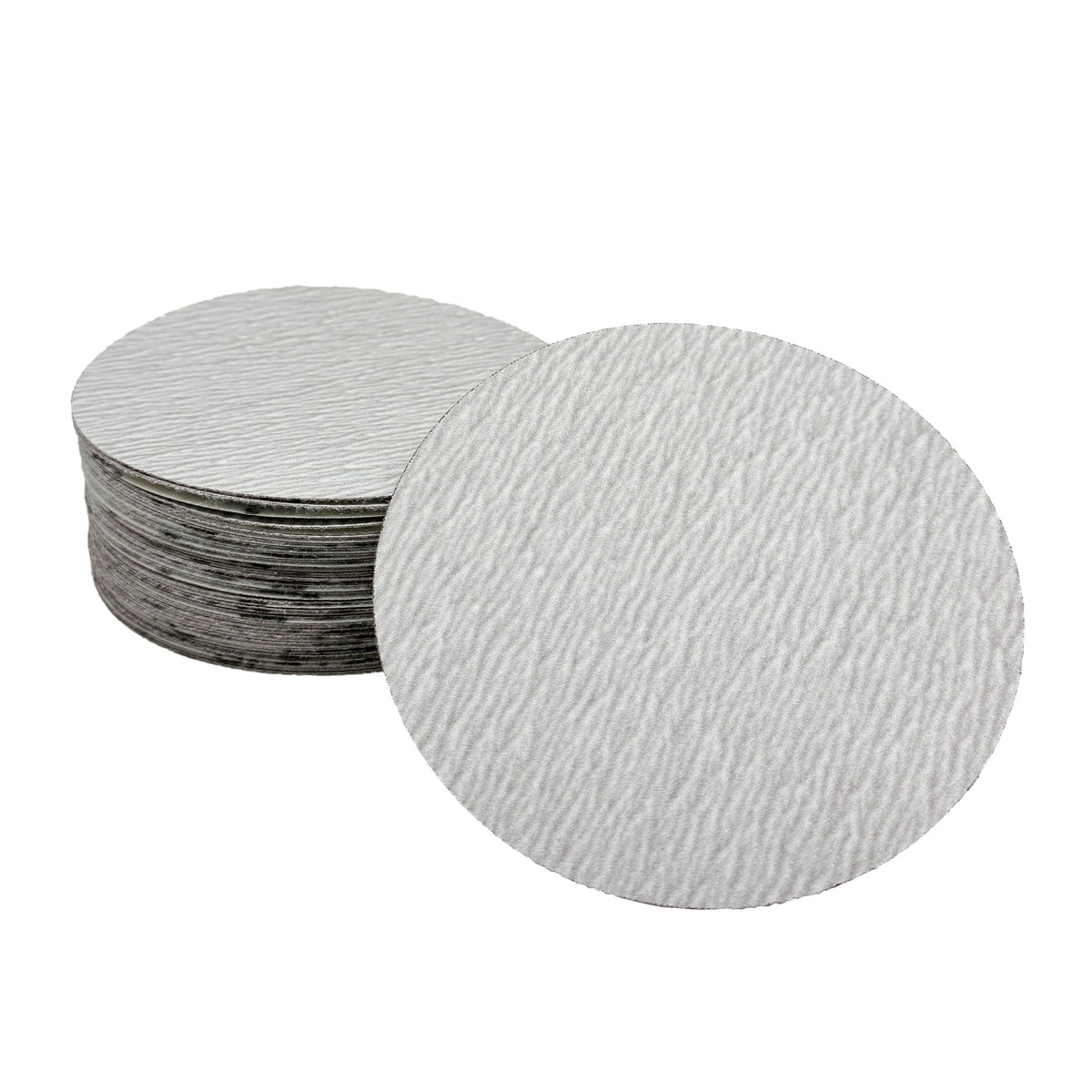
5" and 6" White/Gold Hook & Loop Aluminum Oxide Sanding Discs For Metal Polishing | 50 Pack
✅ AVAILABLE IN A WIDE GRIT RANGE FROM 80 GRIT TO 800 GRIT
✅ MOST POPULAR GRITS ARE 320 & 400 GRIT
✅ BEST SANDING DISCS FOR POLISHING ALCOA WHEELS, GAS TANKS, FENDERS, GRILLS, AIR COOLERS ETC.
✅ #1 SANDING DISC IN THE TRUCKING & BIG RIG MARKET
Ensure proper Surface Preparation with Hook & Loop (Velcro) Sanding Discs
Our Hook & Loop (Velcro) Sanding Discs are your ideal choice for achieving a smooth, even surface before diving into the polishing process. Sanding progressively with finer grits is the key to concealing imperfections like pits, scratches, and burns, ultimately leading to a flawless, mirror-like finish. These versatile discs are expertly crafted for polishing both aluminum and stainless steel surfaces, and they are available in a range of grits including 80, 100, 120, 180, 220, 320, 400, 600, and 800 grit.
Pro Tips for Effective Sanding
When working with aluminum or stainless steel, it's crucial to start with the least aggressive grit to address imperfections on your workpiece, whether it's a gas tank, Alcoa wheel, bumper, fender, or any other metal surface. If you're dealing with pits or scratches on a tank, begin with a less aggressive grit like 220 or 320. If this successfully removes the initial imperfections, you can progress through the sanding stages. In most cases, it's rare to need a coarser grit (example: 120 grit), except for more extreme situations in which the surface is heavily worn or weathered.
Choosing the Right Grits
While we offer coarse grits like 120, 180, and 220, the most common grits for metal polishing are often 320 and 400. The Brown Tripoli Polishing Compound for aluminum polishing (cutting stage on aluminum) and the Black Magic Polishing Compound for stainless polishing (cutting stage on stainless) can effectively remove scratches from sandpaper with a 400 grit. Therefore, transitioning to a 600 or 800 grit is typically necessary only for professionals seeking a show-quality shine.
Selecting the Perfect Sander
To complement your sanding process before using buffing wheels and buffing compounds for metal polishing, we recommend two outstanding sanders suitable for use with our sanding discs. Choose the one that best suits your needs:
-
Corded Orbital Sander - Craftsman Random Orbit Sander, priced around $55.
-
Cordless Orbital Sander - Milwaukee Cordless Orbital Sander, available around $120.
Both options provide excellent quality and seamlessly work with our sanding discs to help you achieve outstanding results in your metal polishing projects.
Overall rating: 4.3333335 / 5 from 12 reviews.
AI Generated Review Summary
Summary topics
Review topics: ["price","sand paper","works"].
Review highlights
Reviews
Sand paper and easy red
"Sand paper does the job so does easy red very well, I just can’t seem to get the sprayer on the easy red to work. I got to a job with a new bottle of easy red. I had to take the sprayer off and dump it on a rag. Yes I shook it very well before I put the straw in"
Have not received it yet
"Have not received it yet"
"Works good!"
"Works good for me"
Best sand paper
"Great long lasting"
"Works as they should"
Was really easy to order
"Was really easy to order and get product I needed. Pricing was good as well"
Great Product!
"I mainly use the 220, 400 and 600. I don't really see the point of using other grits. I have sanded down to 80 and gone all the way to 600 on wheels and from 10ft away I can't tell the difference in the ones that I only did 220 and 400 on."
"Honestly not as fine as i expected pretty thin as well"
Q&A


4.3/5customer rating
12customer reviews
50 discsin every pack
80–800 gritnine grit options

PREP THE METAL. CONTROL THE FINISH.
Build the surface that makes the final shine possible
White/Gold Aluminum Oxide Hook & Loop Discs give metal polishers a progressive surface-preparation system for aluminum and stainless steel—from aggressive correction through show-quality prep.
PRODUCT AT A GLANCE
One disc system for everyday correction and advanced prep
All original size, grit, material and pack information in one shop-side reference.
Designed for sanding aluminum and stainless steel before polishing.
Velcro-style backing for fast disc changes on compatible sanding pads.
Select the diameter that matches your compatible orbital sander and backing pad.
Each selected size-and-grit option is sold as a 50-pack.
Coarser choices for surfaces that need more correction.
Finer choices for common polishing prep and advanced final preparation.
The most commonly used grits for metal-polishing preparation.
For polishable metal surfaces including wheels, tanks, trim and working components.
VISUAL GRIT GUIDE
Start with the least aggressive grit that removes the defect
Test a small area first. Move coarser only when the current grit cannot correct the surface, then progress finer before polishing.
Reserve the coarser end for heavily worn or weathered metal. The original guidance notes that even 120 grit is rarely needed outside more extreme conditions.
For pits or scratches, begin with a less aggressive grit such as 220 or 320 and see whether it removes the initial imperfections.
A common final sanding stage before Brown Tripoli on aluminum or Black Magic on stainless steel.
Typically used when professionals want additional refinement before a show-quality shine.
Pro rule: do not automatically begin with the coarsest grit. Start with the least aggressive disc that corrects the surface and avoid skipping large grit steps.
THE GRIT DECISION
Match the starting point to the condition
This guide organizes the product’s complete 80–800 grit range without replacing a test spot and professional judgment.
Grit rangeUse in the sequenceProduct guidance
80–180Aggressive correctionChoose only when heavily worn or weathered surfaces require a coarser start.
220–320Defect removal + common starting rangeA practical starting range for pits and scratches; 320 is one of the most popular grits.
400Common final prep before cutting compoundBrown Tripoli on aluminum and Black Magic on stainless can remove 400-grit sanding scratches.
600–800Additional refinementUsually selected by professionals preparing for a show-quality shine.
THE PROGRESSIVE PROCESS
Remove the previous sanding pattern before stepping finer
- 1Clean and inspect
Remove contamination and identify pits, scratches, burns and heavily weathered areas.
- 2Test your starting grit
Begin with the least aggressive grit likely to correct the defect—often 220 or 320 for pits and scratches.
- 3Sand evenly
Keep the disc controlled and work the defect until the surface is consistent.
- 4Progress finer
Use the next appropriate grit and remove the previous sanding pattern before moving on.
- 5Transition to polishing
Finish at 400 for a common compound-ready surface, or continue to 600/800 for advanced show preparation.
BUILT FOR WORKING METAL
Where these discs fit
Alcoa wheelsCorrect suitable bare aluminum wheel surfaces before compounding and polishing.
Fuel + gas tanksWork through pits, scratches and weathering with a progressive grit sequence.
Bumpers + fendersPrepare compatible aluminum or stainless components for a bright final finish.
GrillesRefine accessible polishable metal before the cutting and coloring stages.
Air coolersUse the appropriate grit progression on compatible polishable metal surfaces.
Big rigs + shop workKeep the full grit range ready for routine correction and advanced restoration.
FROM SANDING TO POLISHING
Know when the disc has finished its job
The next step depends on the metal and the finish target.
Brown Tripoli cutting compound can effectively remove the 400-grit sanding pattern during the aluminum cutting stage.
Black Magic cutting compound can effectively remove the 400-grit sanding pattern during the stainless cutting stage.
Additional refinement is typically reserved for professionals seeking a show-quality shine.
SANDER COMPATIBILITY
Pair with a compatible orbital sander
Craftsman Random Orbit Sander, priced around $55 in the original product guidance.
Milwaukee Cordless Orbital Sander, available around $120 in the original product guidance.
Select 5-inch or Sunmight 6-inch discs to match your compatible sander and backing pad.
Follow the sander, backing-pad and abrasive manufacturer instructions and ratings.
PROOF FROM THE SHOP AND ROAD
See what verified buyers sanded
Customer reviews below include results on wheels, fuel tanks and other metal-polishing projects.
Jump to customer reviews →WHITE/GOLD DISC FAQ
Questions before you sand
What comes in one pack?
Each selected option contains 50 White/Gold Hook & Loop Aluminum Oxide sanding discs.
Which diameters are available?
The product offers 5-inch and Sunmight 6-inch diameter options. Match the disc to a compatible backing pad and orbital sander.
Which grits are available?
Choose from 80, 100, 120, 180, 220, 320, 400, 600 and 800 grit.
Which grit should I start with?
Start with the least aggressive grit that removes the defect. For pits or scratches, the original guidance suggests trying 220 or 320 first; use a coarser grit only when the surface condition requires it.
Why are 320 and 400 the most popular?
They cover common metal-polishing preparation needs. A 400-grit sanding pattern can then be removed with Brown Tripoli on aluminum or Black Magic on stainless steel.
When should I use 600 or 800 grit?
Those finer grits are typically used by professionals who want additional refinement before a show-quality shine.
Can I use these on aluminum and stainless steel?
Yes. These aluminum oxide discs are presented for surface preparation on both aluminum and stainless steel before polishing.
READY TO BUILD THE FINISH?
Choose your diameter, choose your grit, then work progressively
Prepare aluminum and stainless steel for cleaner, more predictable polishing results.






























































































